The short version
- In a large US study, the rate of fat gain doubled and lean mass started to fall when the menopause transition began. Both changes leveled off about two years after the final period.
- Body weight did not speed up at the transition in that study. What changed was the mix of fat and muscle.
- You cannot burn fat from the belly alone, but exercise programs reduce waist size and deep abdominal fat in postmenopausal women.
- The best-supported plan combines aerobic activity, strength training twice a week or more, enough protein, and a Mediterranean-style way of eating.
- A waist above 35 inches (88 cm) is worth raising with your doctor, whatever your weight.
What changes in your body during the transition
The clearest picture comes from the Study of Women's Health Across the Nation, known as SWAN. Researchers followed a large group of US women for years and scanned their body composition repeatedly, so they could line each scan up against the date of the woman's final period.1
They found three things.
- Fat gain speeds up. Fat mass was already creeping up before the transition. When the transition started, the rate of gain doubled.
- Muscle starts to go. Lean mass had been rising slowly. At the start of the transition it began to fall.
- It does not last forever. Both trends continued until roughly two years after the final period and then flattened out.
One detail surprises most people. Body weight in SWAN climbed at a steady pace through the premenopausal years and did not accelerate when the transition began.1 The scale can stay almost the same while fat replaces muscle underneath, which is why clothes change before the number does.
Need more than general advice? Our community offers professional, personalized nutrition and exercise plans. Join the Fit Over 40 community
Why the fat goes to your middle
Before menopause, estrogen steers fat toward the hips and thighs. As estrogen falls, storage shifts toward the abdomen.3 Some of that new fat sits under the skin, where you can pinch it. Some sits deeper, around the liver and intestines. This deeper layer is called visceral fat, and it makes the belly feel firm instead of soft.3
Age adds to the effect. With less muscle you burn slightly less energy at rest, and many women move less and sleep worse in their late forties and fifties. Hormones start the shift, and daily habits decide how far it goes.
Why it matters for your health
Where you carry fat tells doctors more than how much you weigh. Fat carried mainly around the waist is linked to a higher risk of heart disease and type 2 diabetes than fat carried at the hips.4
The simplest check is a tape measure. Risk rises when a woman's waist is over 35 inches, or 88 cm.5 To measure, stand up, wrap the tape around your bare middle just above the hip bones, and read it right after you breathe out.4
What actually reduces it
No exercise or food removes fat from the belly alone. What works is lowering body fat overall while protecting muscle. Here is what the evidence supports.
1. Do both kinds of exercise
A 2023 analysis pooled 101 randomized trials that included 5,697 postmenopausal women. Exercise training reduced fat mass, waist size and visceral fat, and it increased muscle. Aerobic exercise did more for fat loss. Resistance training did more for muscle. Doing both covered both.2
The World Health Organization's target for adults is 150 to 300 minutes of moderate aerobic activity a week, plus muscle-strengthening work for all major muscle groups on two or more days.6 Brisk walking, cycling, swimming and dancing all count as aerobic activity.
New to weights? Our illustrated strength routine for beginners shows eight moves you can do at home.
2. Eat enough protein
Muscle needs protein to rebuild after training. An international expert group, PROT-AGE, recommends 1.0 to 1.2 grams of protein per kilogram of body weight a day for healthy adults over 65, and more for those who exercise.7 That advice was written for an older age group, so treat it as a target to discuss with your clinician. If you have kidney disease, ask before raising your protein intake.
For a woman who weighs 70 kg (about 154 lb), that range is 70 to 84 grams a day. Spread it across your meals.
3. Shift toward a Mediterranean-style plate
A 2024 systematic review looked at trials that put menopausal women on a Mediterranean diet. The studies were few and small, but they pointed the same way: lower weight, blood pressure, triglycerides and cholesterol.8 The pattern is simple: vegetables, fruit, beans, whole grains, fish, nuts and olive oil most days, with less red meat, sugar and processed food.
See the menopause food list for a shopping guide.
4. Protect your sleep
Short or broken sleep makes it harder to exercise and easier to overeat the next day. If night sweats are what wakes you, that is treatable. Read about treatments for hot flashes that do not involve hormones, and ask your doctor about all your options.
5. Ask about hormone therapy for the right reasons
Hormone therapy is the most effective treatment for hot flashes and night sweats, and it helps prevent bone loss.9 It is not prescribed to reduce weight or belly fat. Whether it suits you depends on your age, how long ago your periods stopped, and your medical history, so this is a decision to make with your clinician.
What does not work
- Spot reduction. Ab workouts build muscle under the fat. They do not remove the fat.
- Detox teas and waist trainers. Any change is water or compression and is gone within hours.
- Very low calorie diets. Rapid weight loss takes muscle with it, which is the opposite of what you need at this stage.
- "Hormone balancing" supplements. We have not found good-quality trial evidence that any over-the-counter supplement reduces abdominal fat in menopause.
When to see a doctor
Book an appointment if any of these apply.
- Your waist is over 35 inches (88 cm), or it is growing quickly.
- You have gained weight fast without a change in eating or activity.
- Your belly is swollen or painful, or you feel full after a few bites.
- You have any vaginal bleeding after menopause.
- You bruise easily, have new purple stretch marks, or notice weakness in your thighs and upper arms. These can be signs of a hormone condition and are covered in our guide to cortisol and menopause belly.
Common questions
How long does it take to lose menopause belly fat?
There is no reliable timeline, and anyone who promises one is guessing. Strength-training studies in postmenopausal and older women ran for about 16 weeks on average,10 so judge your plan over months, not days. Track your waist every two to four weeks instead of weighing daily.
Does hormone therapy get rid of belly fat?
Hormone therapy is prescribed for symptoms such as hot flashes and vaginal dryness and to prevent bone loss.9 It is not a weight-loss treatment. If symptoms are wrecking your sleep and your ability to exercise, treating them may make the other habits easier, which is a conversation to have with your clinician.
Is walking enough?
Walking counts toward the 150 to 300 minutes of moderate activity a week that the World Health Organization recommends, and aerobic exercise is the type most clearly linked to fat loss in postmenopausal women.2,6 Walking does little to stop muscle loss, so add strength work on at least two days.
Do crunches flatten a menopause belly?
Crunches strengthen the abdominal muscles but do not remove the fat over them. Fat is lost from the whole body through overall activity and eating, not from the spot you exercise.
References
- Greendale GA, Sternfeld B, Huang M, et al. Changes in body composition and weight during the menopause transition. JCI Insight. 2019;4(5):e124865. https://doi.org/10.1172/jci.insight.124865
- Khalafi M, Habibi Maleki A, Sakhaei MH, et al. The effects of exercise training on body composition in postmenopausal women: a systematic review and meta-analysis. Front Endocrinol. 2023;14:1183765. https://pubmed.ncbi.nlm.nih.gov/37388207/
- Cleveland Clinic. What causes 'menopause belly' and what you can do about it. https://health.clevelandclinic.org/menopause-belly
- National Heart, Lung, and Blood Institute. Assessing your weight and health risk. https://www.nhlbi.nih.gov/health/educational/lose_wt/risk
- The Menopause Society. Are you officially overweight? https://menopause.org/for-women/menopauseflashes/exercise-and-diet/are-you-officially-overweight-
- World Health Organization. Physical activity: fact sheet. https://www.who.int/news-room/fact-sheets/detail/physical-activity
- Bauer J, Biolo G, Cederholm T, et al. Evidence-based recommendations for optimal dietary protein intake in older people: a position paper from the PROT-AGE Study Group. J Am Med Dir Assoc. 2013;14(8):542-559. https://pubmed.ncbi.nlm.nih.gov/23867520/
- Gonçalves C, Moreira H, Santos R. Systematic review of Mediterranean diet interventions in menopausal women. AIMS Public Health. 2024;11(1):110-129. https://pmc.ncbi.nlm.nih.gov/articles/PMC11007410/
- The 2022 hormone therapy position statement of The North American Menopause Society. Menopause. 2022;29(7):767-794. https://pubmed.ncbi.nlm.nih.gov/35797481/
- Thomas E, Gentile A, Lakicevic N, et al. The effect of resistance training programs on lean body mass in postmenopausal and elderly women: a meta-analysis of observational studies. Aging Clin Exp Res. 2021. https://doi.org/10.1007/s40520-021-01853-8
Every health claim above links to its source. Before publication the article was read and approved by Claudia Muresian, health psychologist, fitness coach and healthy nutrition specialist. It is general information and cannot take your personal history into account, so use it to prepare for a conversation with your own clinician.
Spotted an error? Tell us and we will check it.
Workouts to try
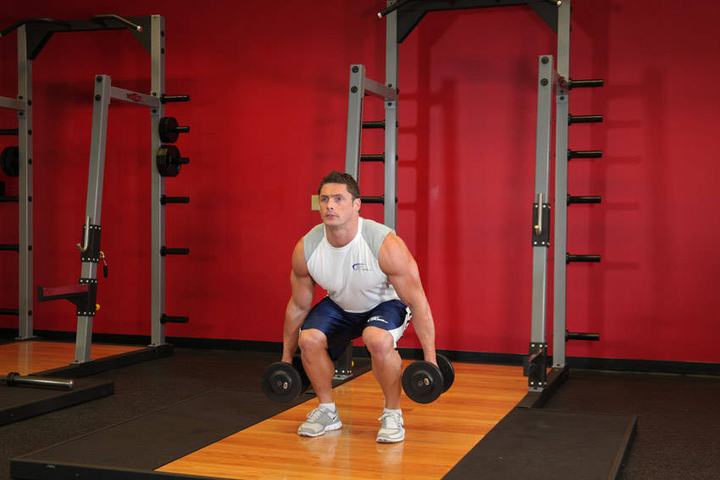 Full-body dumbbell workout for beginners30 minutes, 7 exercises
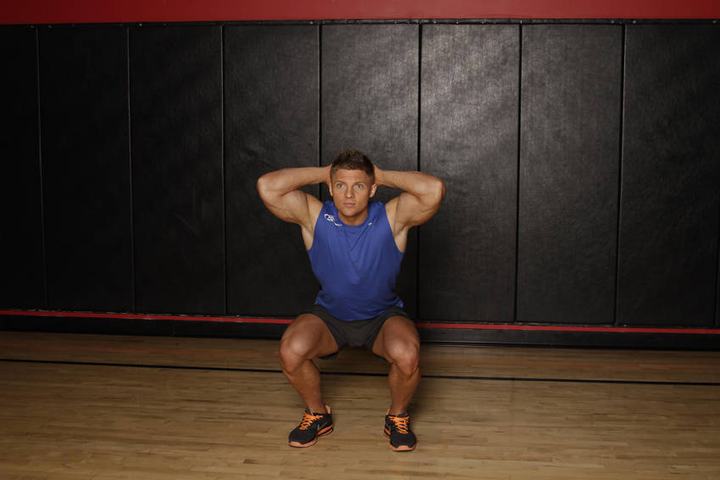 Lower body and glute workout30 minutes, 6 exercises
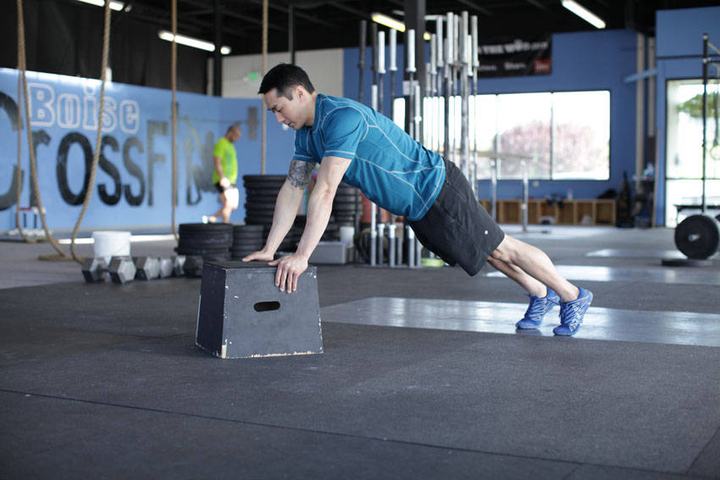 Upper body and posture workout30 minutes, 7 exercises